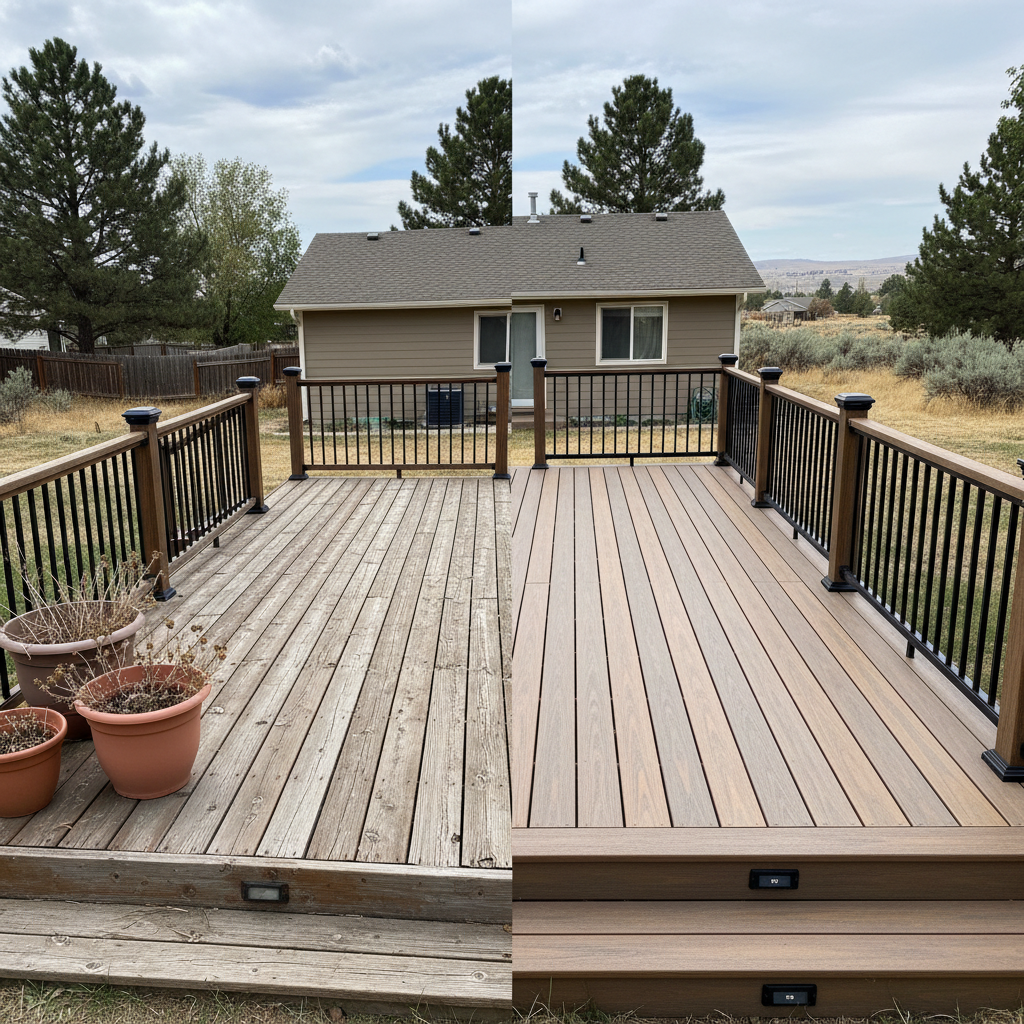
Alright, so you're thinking about a Trex deck for your backyard here in Boise. Smart move, truly. Composite decking, especially Trex, really is a fantastic choice for our climate – it handles everything from those scorching July afternoons to the frosty January mornings without much fuss. But when you start looking into Trex, you'll quickly hear terms like 'capped' and 'uncapped.' What's the big deal with that? Let's clear it up, because understanding the difference makes a huge impact on the cost, how much work you'll put in, and how long your deck will actually look good.
What's the Difference?
Think of it this way: uncapped composite is the original recipe. It's a mix of recycled wood fibers and plastic, all pressed together. It's solid, it's durable, and it's a massive step up from traditional wood when it comes to maintenance. But it still has some wood in there, which means it can soak up a bit of moisture, and it's more likely to fade and stain over time.
Capped composite, on the other hand, is like that original recipe but with a superhero suit on. It's got the same wood-plastic core, but then it's wrapped on three or four sides (top and sides, sometimes the bottom too) with an extra layer of high-performance plastic. This cap is usually made from polyethylene or polypropylene, and it's fused right onto the core during manufacturing. Pretty clever, right?
Cost: The Upfront Sticker Shock
Let's be blunt: capped Trex will cost you more upfront. Plain and simple. That extra protective layer, the more advanced manufacturing process, it all adds up. You're looking at anywhere from 15% to 30% more per linear foot for capped boards compared to uncapped. For a typical 300-square-foot deck, that difference can easily be a few thousand dollars just for the materials. If your budget is super tight and you're just trying to get a durable deck without breaking the bank, uncapped might seem like the obvious choice.
Durability & Maintenance: Where the Rubber Meets the Road
This is where capped Trex really shines, especially for us here in the Treasure Valley. Remember that cap? It's a game-changer for durability and, even more importantly, for maintenance.
- Stain Resistance: That cap is practically impervious to stains. Spilled BBQ sauce, red wine, grease from the grill – a quick wipe and it's gone. Uncapped? You'll need to be quicker with the cleanup, and some stains might just stick around.
- Fade Resistance: Our Boise sun is no joke, particularly in July and August. Uncapped composite will fade over time. It won't turn white, but it'll lose some of its original color vibrancy. Capped Trex, though, is engineered with UV inhibitors in that outer shell, so it holds its color much, much better. You'll barely notice any fading, even after years of direct sun exposure.
- Scratch & Mold Resistance: The cap provides a much harder surface, making it more resistant to scratches from patio furniture or even pet claws. It also creates a barrier against moisture, which significantly cuts down on the chances of mold and mildew growth. Uncapped can still get mold, especially in shady, damp spots or if you've got a lot of trees dropping leaves on it, like in the North End.
- Cleaning: For capped Trex, a hose and a soft brush are usually all you need. Maybe some mild soap for tougher spots. Uncapped might require a bit more elbow grease, and specific composite deck cleaners to tackle mildew or embedded dirt.
Appearance: Long-Term Looks
Initially, both capped and uncapped Trex decks look great. Trex has come a long way in mimicking natural wood grain and offering a wide range of colors. But the long-term appearance is where capped really pulls ahead. Because it resists fading, staining, and mold so much better, a capped deck keeps its 'new' look for far longer. It’s going to hold onto that rich color and clean finish year after year with minimal effort. What's not to love?
My Recommendation for Boise Homeowners
Look, I'm Alpha Decks Boise, and I've built a lot of decks in this town. If your budget allows, I'm going to steer you towards capped Trex every single time. Yes, it's more expensive upfront. I totally get that. But the long-term benefits in terms of less maintenance and a superior appearance are just undeniable. You're buying a deck to enjoy, not to constantly clean or worry about fading.
Think about it: you're installing a deck that's going to be exposed to our intense summer sun, our snowy winters, and everything in between. You want something that's going to stand up to that and still look fantastic with minimal effort. Capped Trex delivers on that promise. You'll spend less time cleaning and more time actually using your deck, whether it's for a family BBQ or just enjoying a quiet morning coffee.
If you're still weighing your options or have more questions, don't hesitate to reach out. We're here to help you build a deck you'll love for years.